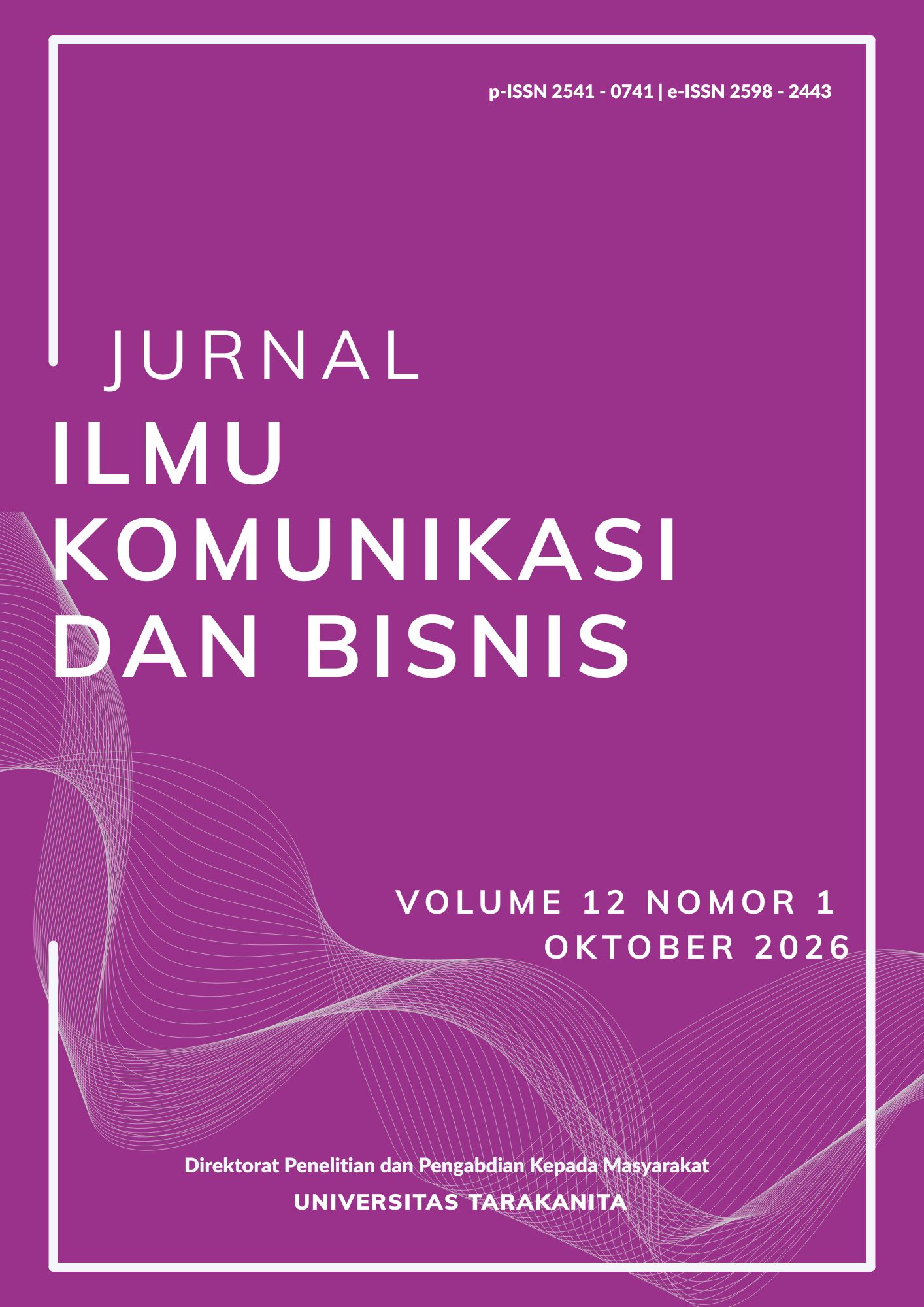
Analisis Sentimen Konten Deepfake pada Tiktok untuk Mengukur Literasi Media Baru di Indonesia
DOI:
https://doi.org/10.36914/jikb.v12.i1.467Keywords:
Deepfake, digital paradox, indobert, media literacy, misinformation, sentiment analysis, tiktokAbstract
The advancement of artificial intelligence (AI) has facilitated the emergence of deepfake content, radically transforming the landscape of misinformation and blurring the boundaries between reality and digital fabrication. This phenomenon presents a significant challenge to new media literacy amidst the high penetration of the TikTok platform. This study aims to fill the research gap by computationally mapping public responses while evaluating societal media literacy levels in responding to such manipulations. A quantitative approach was applied using Natural Language Processing (NLP) and the IndoBERT model to classify 385 text data samples from TikTok. The model demonstrated robust performance, achieving an overall accuracy of 85.71% and a macro F1-Score of 83.34%. Classification results indicate that the polarity distribution is dominated by neutral (225 data) and positive sentiments (95 data), whereas negative (critical) sentiment accounts for only 65 data points. These empirical findings confirm the existence of a digital paradox, where high technology adoption clashes with low algorithmic awareness, leading the public to normalize visual manipulation as a form of entertainment without critical filtering. This study recommends reorienting the national digital literacy curriculum toward AI literacy to enhance public information resilience.
References
Buckingham, D. (2007). Digital media literacies: Rethinking media education in the age of the Internet. Research in Comparative and International Education, 2(1), 43-55. DOI: https://doi.org/10.2304/rcie.2007.2.1.43
Hobbs, R. (2010). Digital and media literacy: A plan of action. The Aspen Institute.
Cahya, R. R., & Ichwani, A. (2026). Komparasi kinerja model Support Vector Machine dan Indonesian Bidirectional Encoder Representations from Transformers dalam klasifikasi sentimen ulasan aplikasi Wondr by BNI. Journal of Science and Social Research, 9(2), 1965-1972.
Fernandes, Y. A., & Fatma, Y. (2025). Metode deep learning dalam teknologi deepfake: Systematic literature review. JATI (Jurnal Mahasiswa Teknik Informatika), 9(2), 3403-3410. DOI: https://doi.org/10.36040/jati.v9i2.12987
Hidayat, T., & Wijaya, K. (2024). Konten ilegal kecerdasan buatan berbasis deepfake dan upaya penanggulangannya di Indonesia. Jurnal Ilmiah Sistem Informasi, 8(1), 22-35.
Ihalauw, S. A., Lapatta, N. T., Nugraha, D. W., Wirdayanti, & Lamasitudju, C. A. (2025). Analisis sentimen terhadap kinerja awal pemerintahan menggunakan IndoBERT dan SMOTE pada media sosial X. Jurnal Algoritma, 22(2), 803-815. DOI: https://doi.org/10.33364/algoritma/v.22-2.2957
Koto, F., Rahimi, A., Lau, J. H., & Baldwin, T. (2020). IndoLEM and IndoBERT: A benchmark dataset and pre-trained language model for Indonesian NLP. Proceedings of the 28th International Conference on Computational Linguistics, 757-770. DOI: https://doi.org/10.18653/v1/2020.coling-main.66
Maharani, M., & Ihsan, M. C. (2026). Kategorisasi komentar live streaming TikTok menggunakan Support Vector Machine. Journal of Artificial Intelligence and Digital Business (RIGGS), 5(1), 5782-5788. DOI: https://doi.org/10.31004/riggs.v5i1.6636
Maulana, M. T. F., Nugroho, B. I., & Utami, E. U. S. (2025). Analisis sentimen ulasan aplikasi TikTok di Google Playstore menggunakan algoritma Naive Bayes. Journal of Artificial Intelligence and Digital Business (RIGGS), 4(3), 6627-6635. DOI: https://doi.org/10.31004/riggs.v4i3.2962
Nugroho, A., & Wulandari, S. (2023). Analisis pengaruh teknologi kecerdasan buatan terhadap penyebaran berita hoax di media sosial. Jurnal NAAFI (STKIP Majenang), 4(2), 112-125.
Patrick, M., Lubis, C., & Dharmawan, A. B. (2024). Pendeteksian citra deepfake wajah di smartphone menggunakan MobileNetV3-Small dan LBP. Jurnal Ilmu Komputer dan Sistem Informasi, 12(1). https://doi.org/10.24912/jiksi.v12i1.28214 DOI: https://doi.org/10.24912/jiksi.v12i1.28214
Pratama, D. A., & Yulianti, E. (2023). Sistem deteksi berita hoaks berbasis algoritma Natural Language Processing (NLP) menggunakan BERT. Open Jurnal STMIK Amika, 6(1), 34-45.
Setiawan, A. A., Santoso, T. A., Prawira, G. J., & Rakhmawati, N. A. (2024). Analisis sentimen publik terhadap penggunaan teknologi deepfake pada era digital. Etika Teknologi Informasi, 1(1), 1-15.
Wicaksono, T. A., Anggelina, E., Reformasianto, V. L., Wimbarti, S., Mufidah, D., & Kusrohmaniah, S. (2024). The impact of TikTok social media on users: A neuropsychological perspective. Psikostudia: Jurnal Psikologi, 13(3), 455-463.[cite: 2] DOI: https://doi.org/10.30872/psikostudia.v13i3.15920
Downloads
Published
Issue
Section
License
Copyright (c) 2026 Amri Sinuraya, Agnes Eviyanti (Author)

This work is licensed under a Creative Commons Attribution-NonCommercial-ShareAlike 4.0 International License.